
[Case Study] Sanctuary 2 + M8
Co-living in Chiang Mai and researching a neuroscience based relationship app concept


After a unique experience in Sicily, I decided to repeat the Sanctuary in Chiang Mai, refine the process, and focus on a neuroscience-based relationship app with long-term impact.
If you’re interested in where I’m going with this, you can find more context on my personal Substack or Instagram.
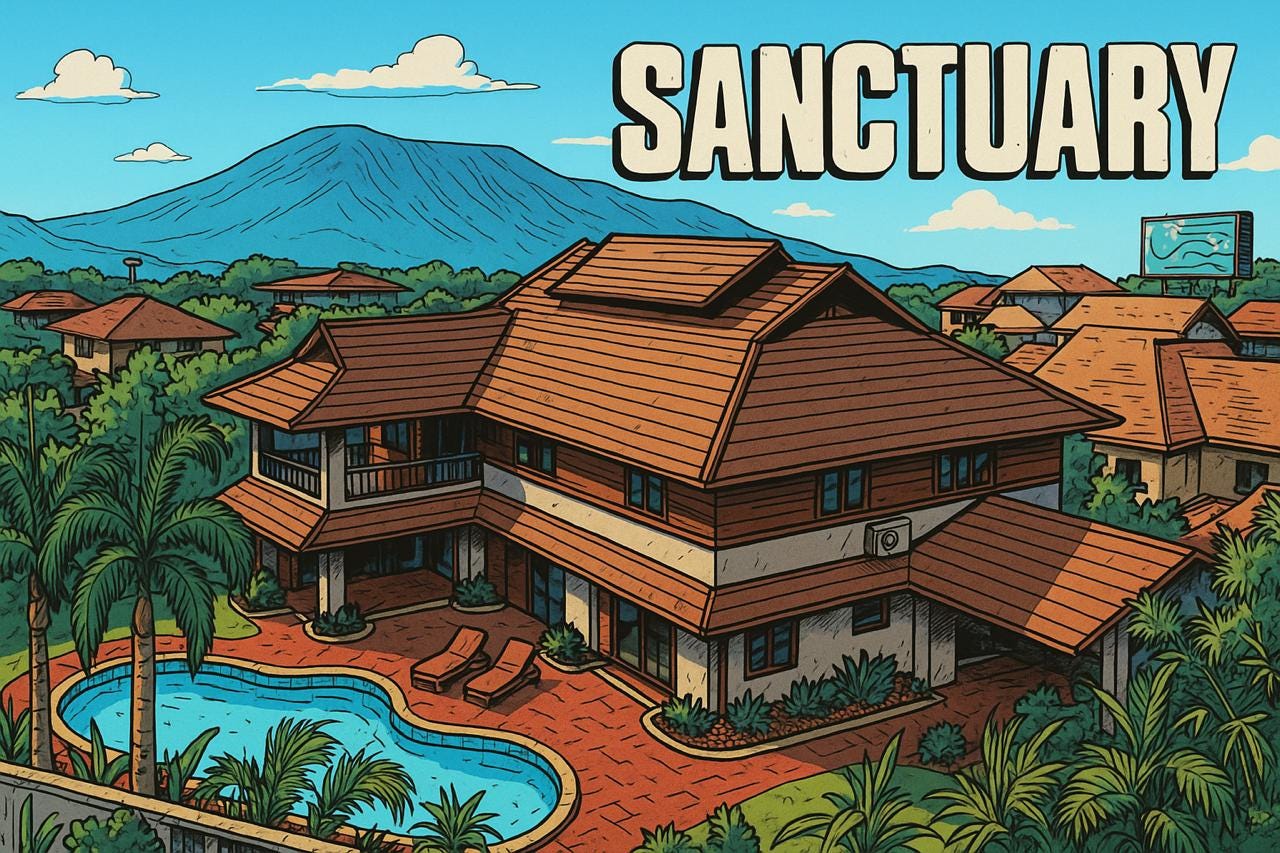
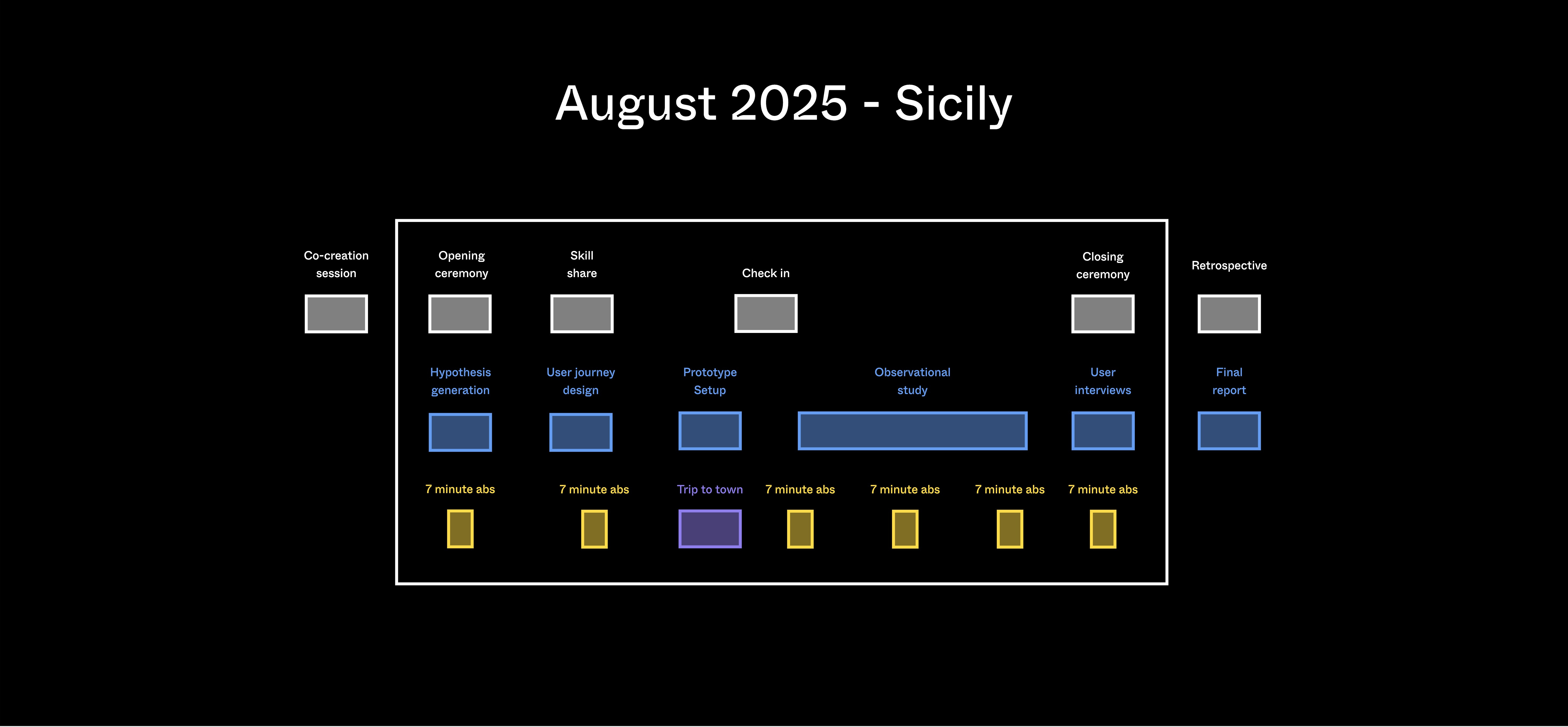
Last time, our setup was relatively simple. The goal was to validate Sanctuary as a co-created residential container for a research project. You can think of the Sanctuary as a health-first research lab with experts living and working together. Bonfires.ai was the research object that was designed to decrease friction in group coordination. The rest of the time was left open for exploration, trips to nearby towns, and exercise.
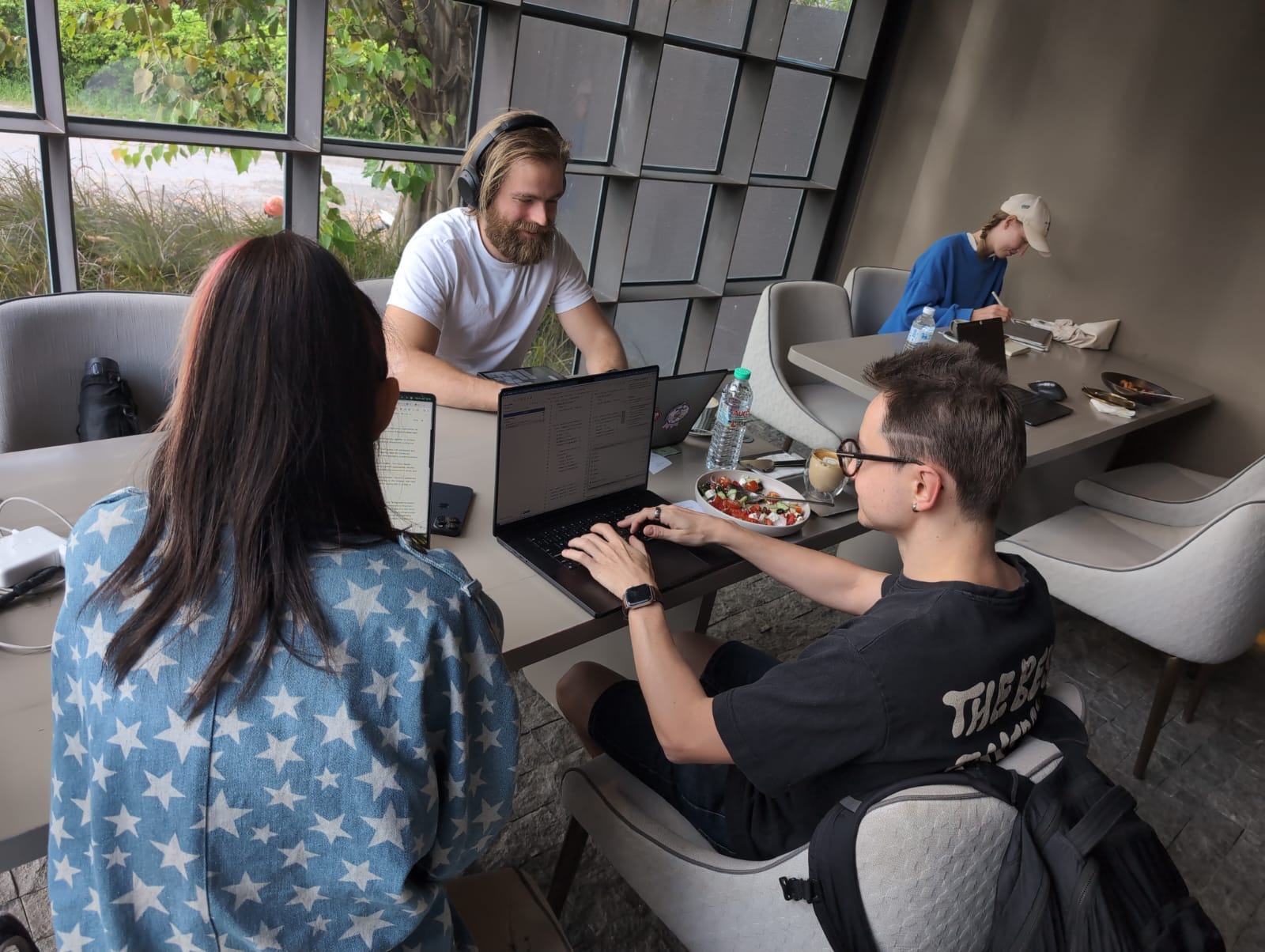
This time, we wanted to take it a step further. The group consisted of eight people with different projects, complementary skills, and often similar interests.
Anna worked on M8 (a neuroscience-based dating and relationship game), Kirill worked on Duo (a dancer community app), Brentis on a Facebook marketplace-based Airbnb copycat and lasers, Jane on ad campaigns, and Sho, Tore, and Tai on individual software projects. Many turned into collaborations that extended beyond the 12 days of the Sanctuary.
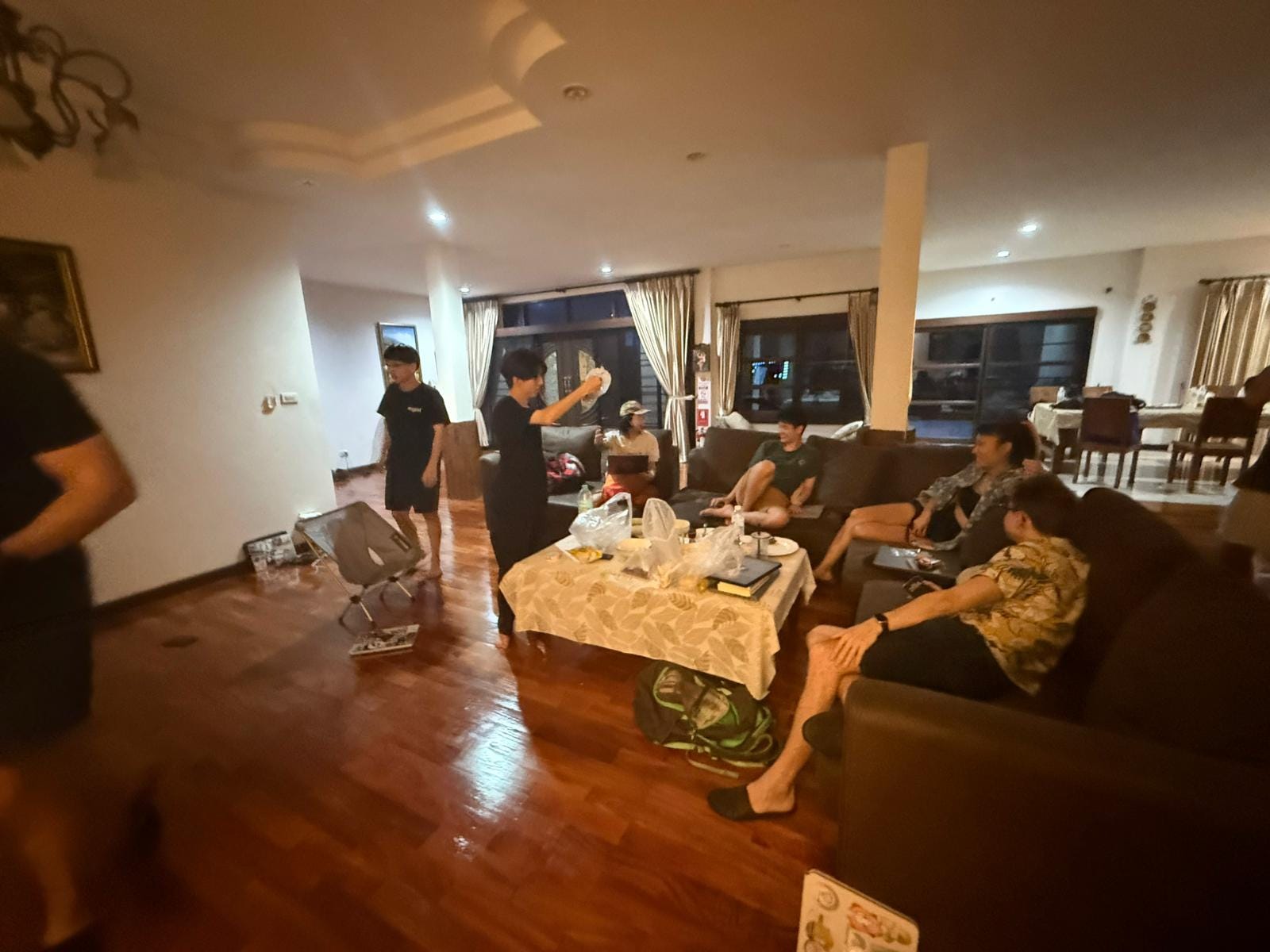
These kinds of collaborations are what we want to see more of! And at its core, the counterculture movement and interest in social technologies united the group.
Just the right amount of structure
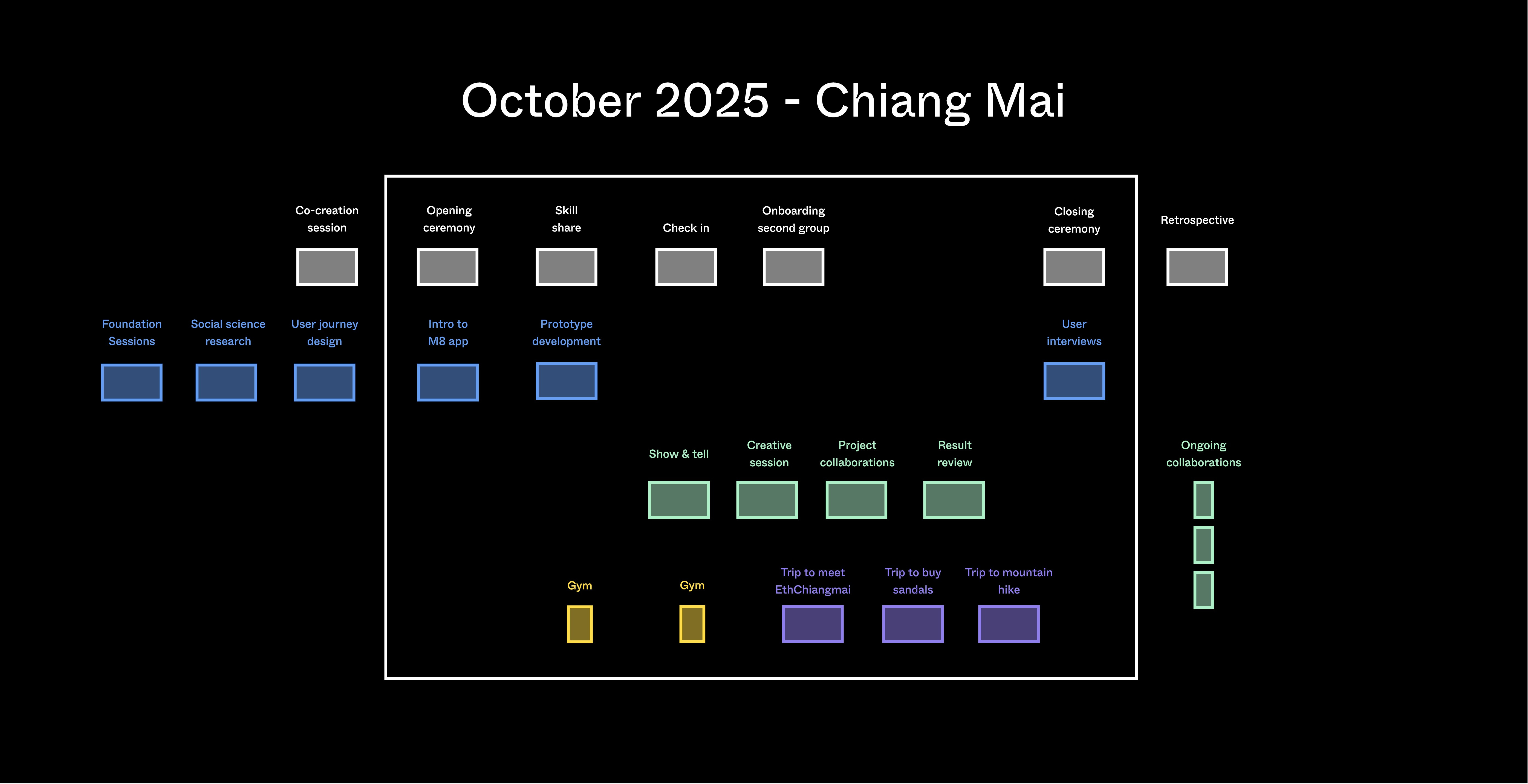
While the Sanctuary felt very short this time (12 days long in total for approximately 8 people), the number of workshops and collaborative sessions felt just right. Enough to exchange information about mutual projects, while allowing space for serendipitous conversations and mindfully paced consolidation of ideas.
Jane also facilitated a “show and tell” session, which gave everyone the platform to present their idea, get feedback, and inspire others to collaborate. That session in itself can provide value, and we'll experiment with it in isolation soon.
It was remarkable to see multiple projects emerge from intrinsic motivation, space to exchange ideas, and a daily trip to a coffee place around the corner.
M8 design and testing
Our research focus during this Sanctuary was Anna’s neuroscience-based app M8. Our goal was to make progress fast, with a scientific approach. To make the research and design process manageable, we started breaking down the larger vision of the novel dating app concept into more manageable sub-projects. The product perspective of the first half of Jake Knapp’s Foundation Sprint was invaluable.
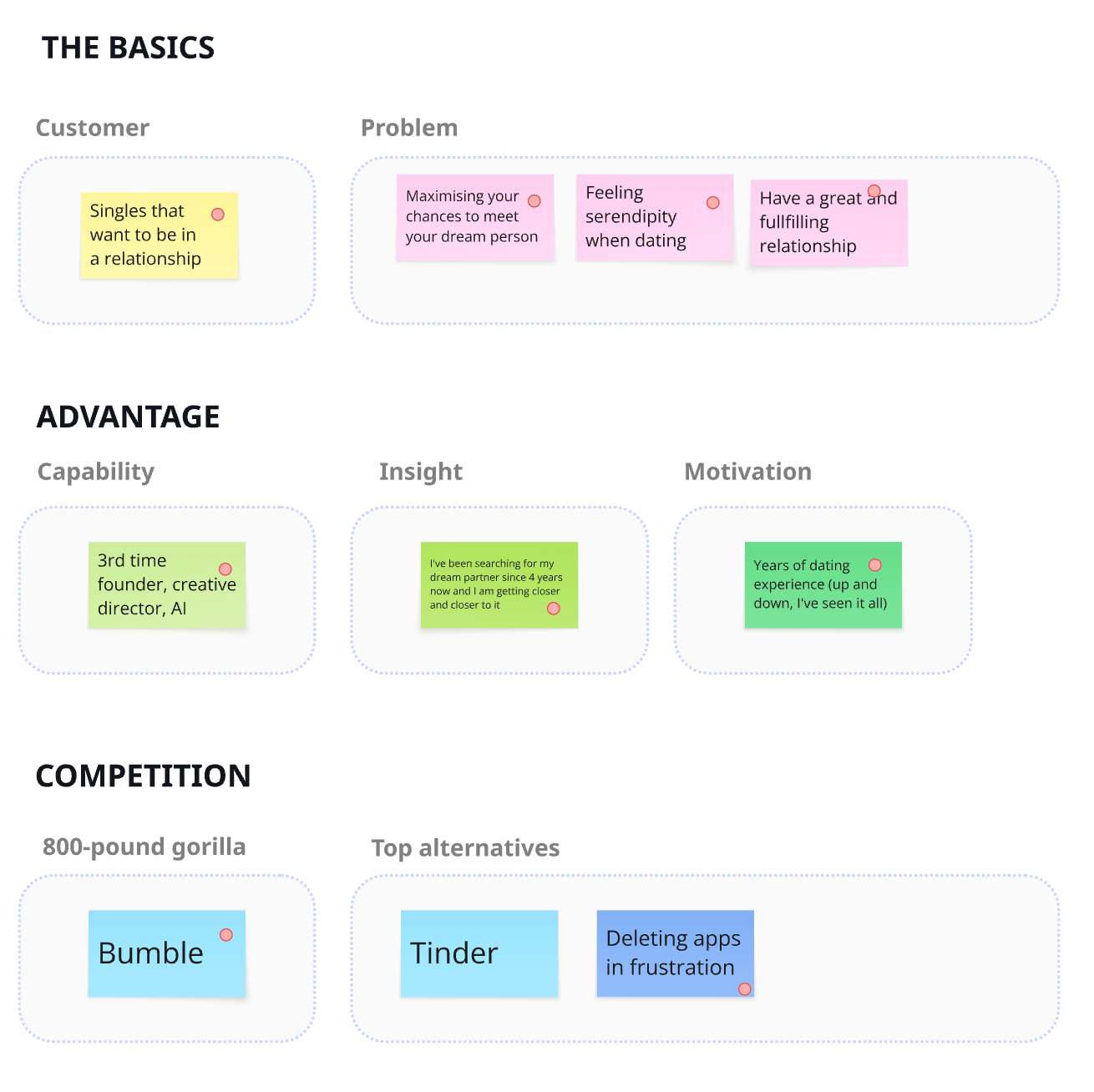
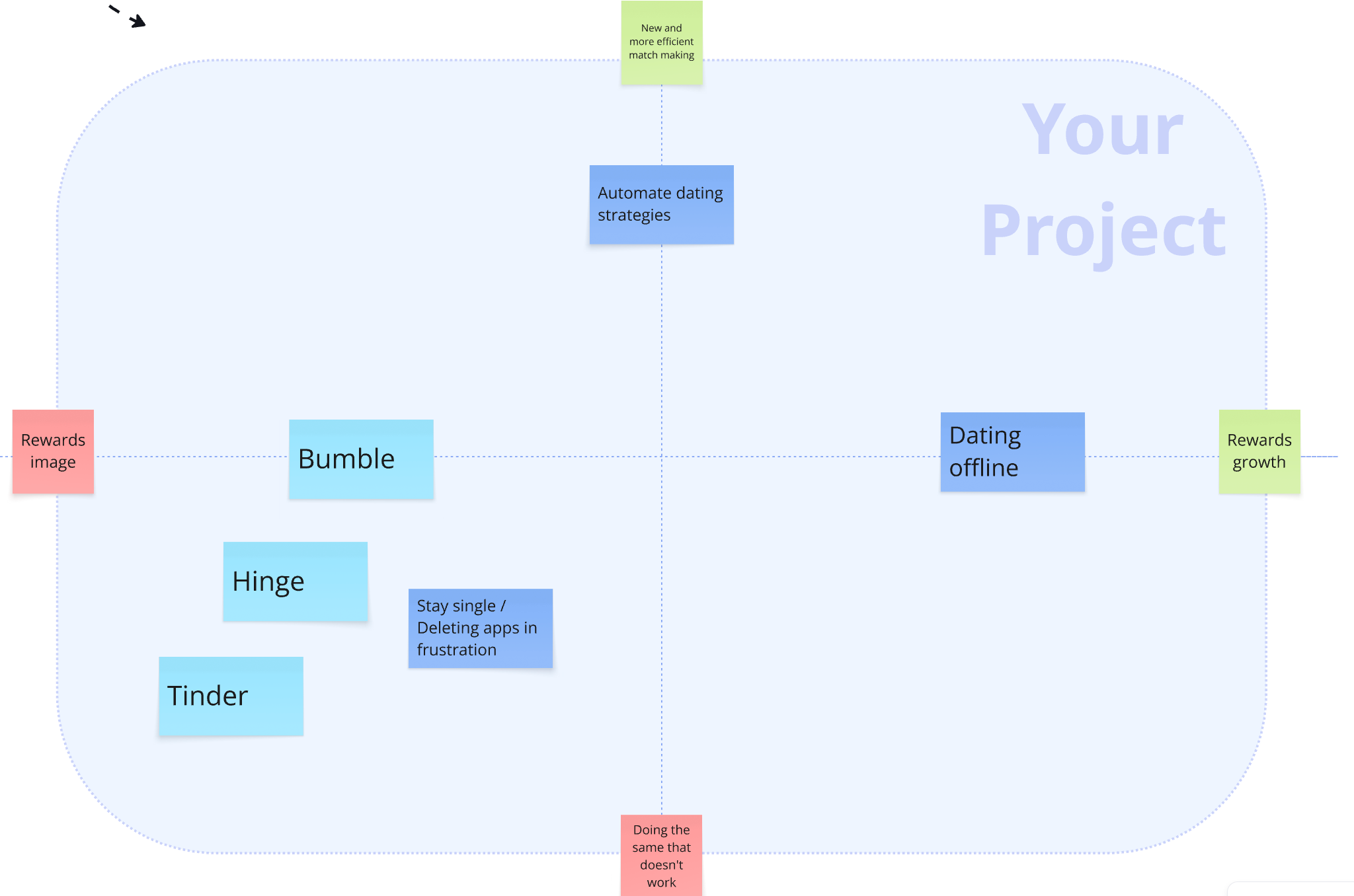
It allowed us to dissect the features and end with a list of different features, which we could then prioritise.
“Breaking the larger vision of M8 into clear feature components was transformative. For the first time, I could see how the neuroscience engine, affective profiling, and AI-guided experience fit into a concrete roadmap. That clarity made it dramatically easier to build the pitch deck, define an MVP, and articulate strong, investor-ready selling points.”
- Anna

Next, we went through a shorter version of the Estuarine Mapping exercises from Cynefin Inc. Shout-out to Jules Yim | 芊文 for the mentorship.
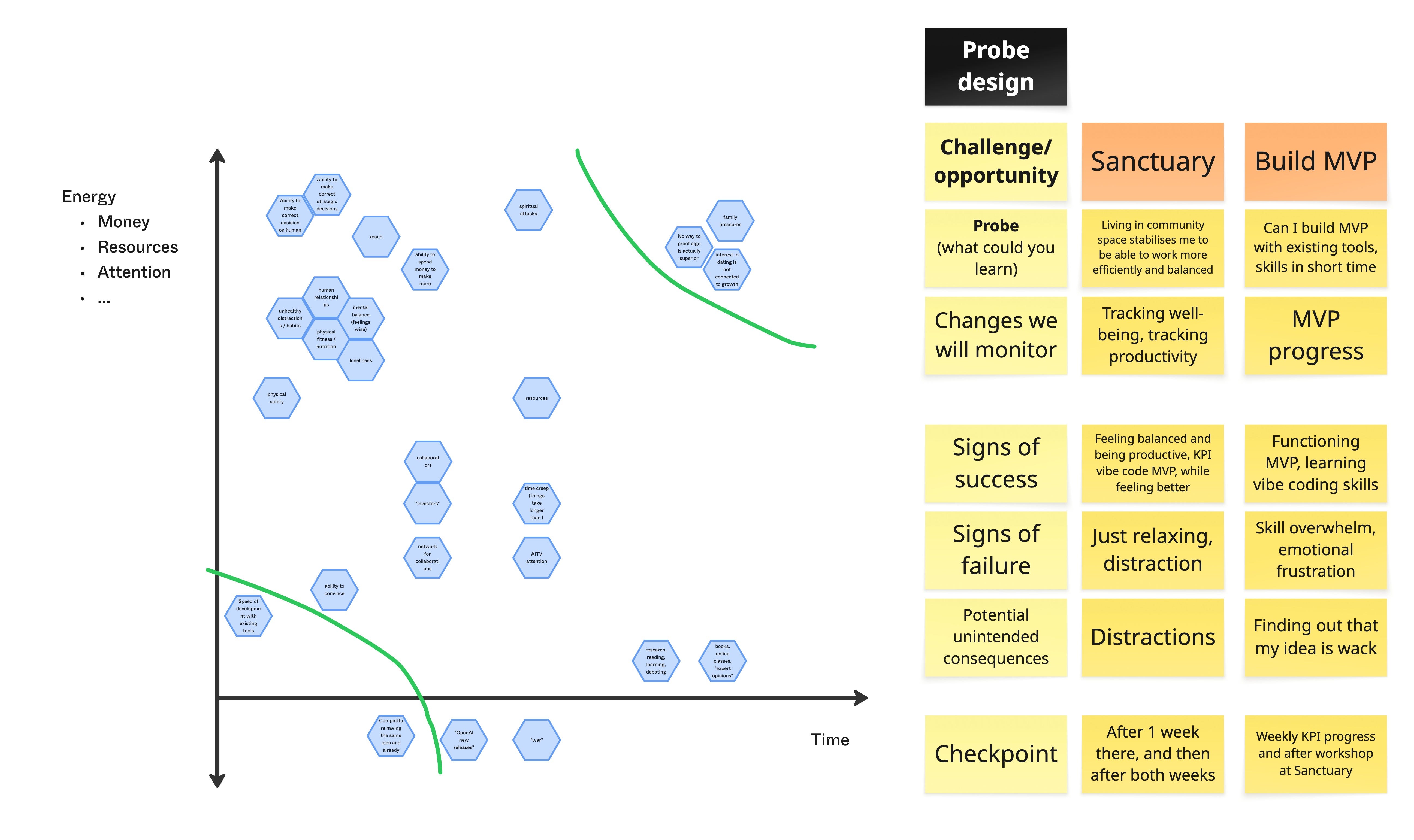
“The Estuarine Mapping session didn’t just clarify the product - it clarified me. It surfaced personal patterns and blind spots that could have quietly sabotaged the project later. Becoming aware of those dynamics this early gave me the tools to lead more clearly, make better decisions, and stay aligned with the deeper purpose of M8.” - Anna
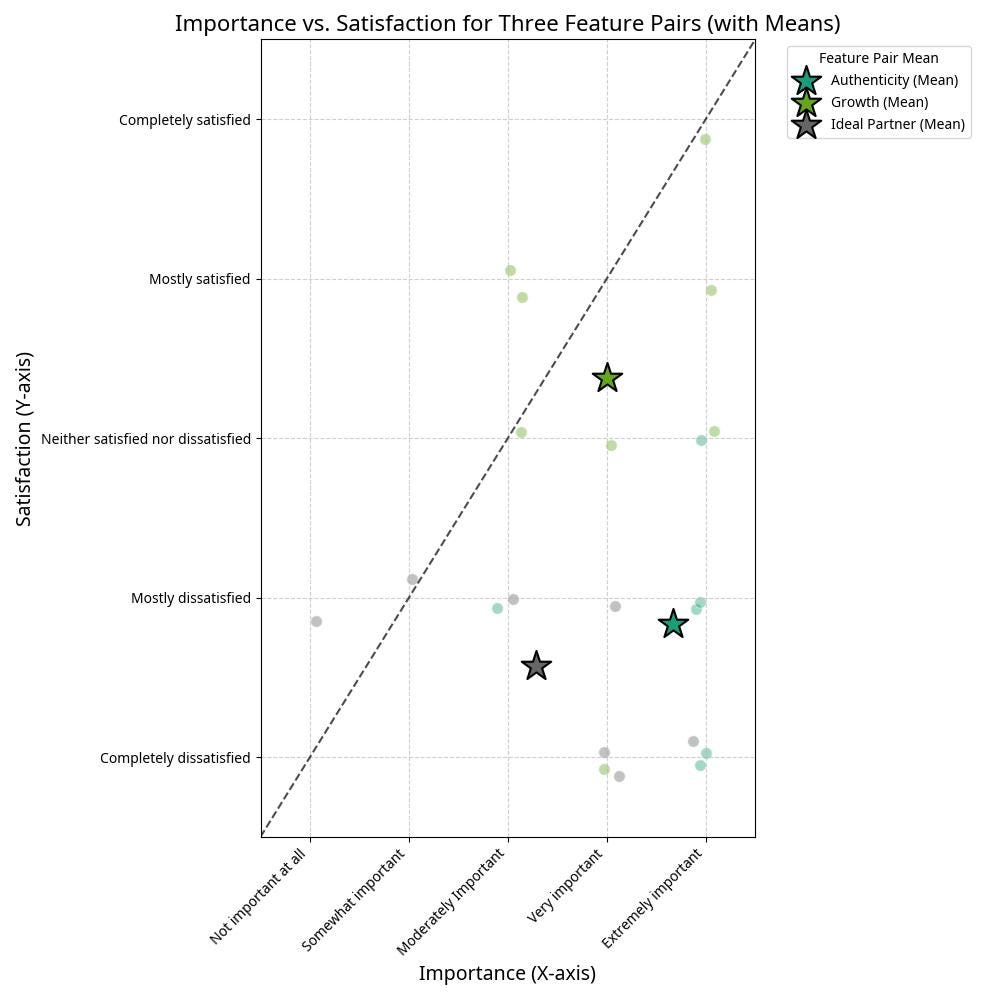
While inviting our Sanctuary participants, I added a few questions to the onboarding survey to understand which specific features of a dating app might be most impactful. In our case, it was clear that supporting authenticity in the dating process was seen as most important, with high dissatisfaction with current solutions.
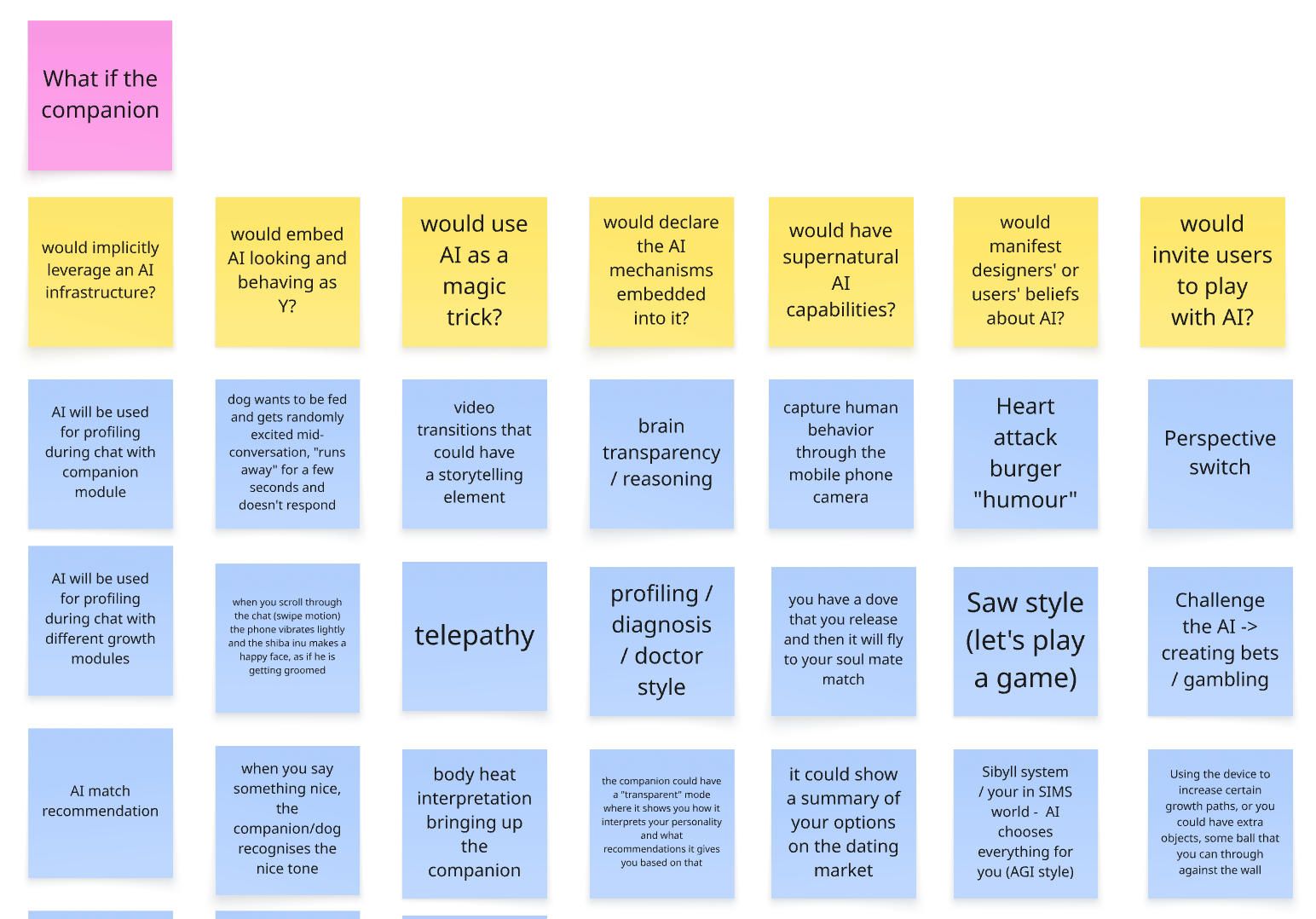
To design the user experience of the AI-based guide, we did a user journey exercise, including how we could embed magical behavior.
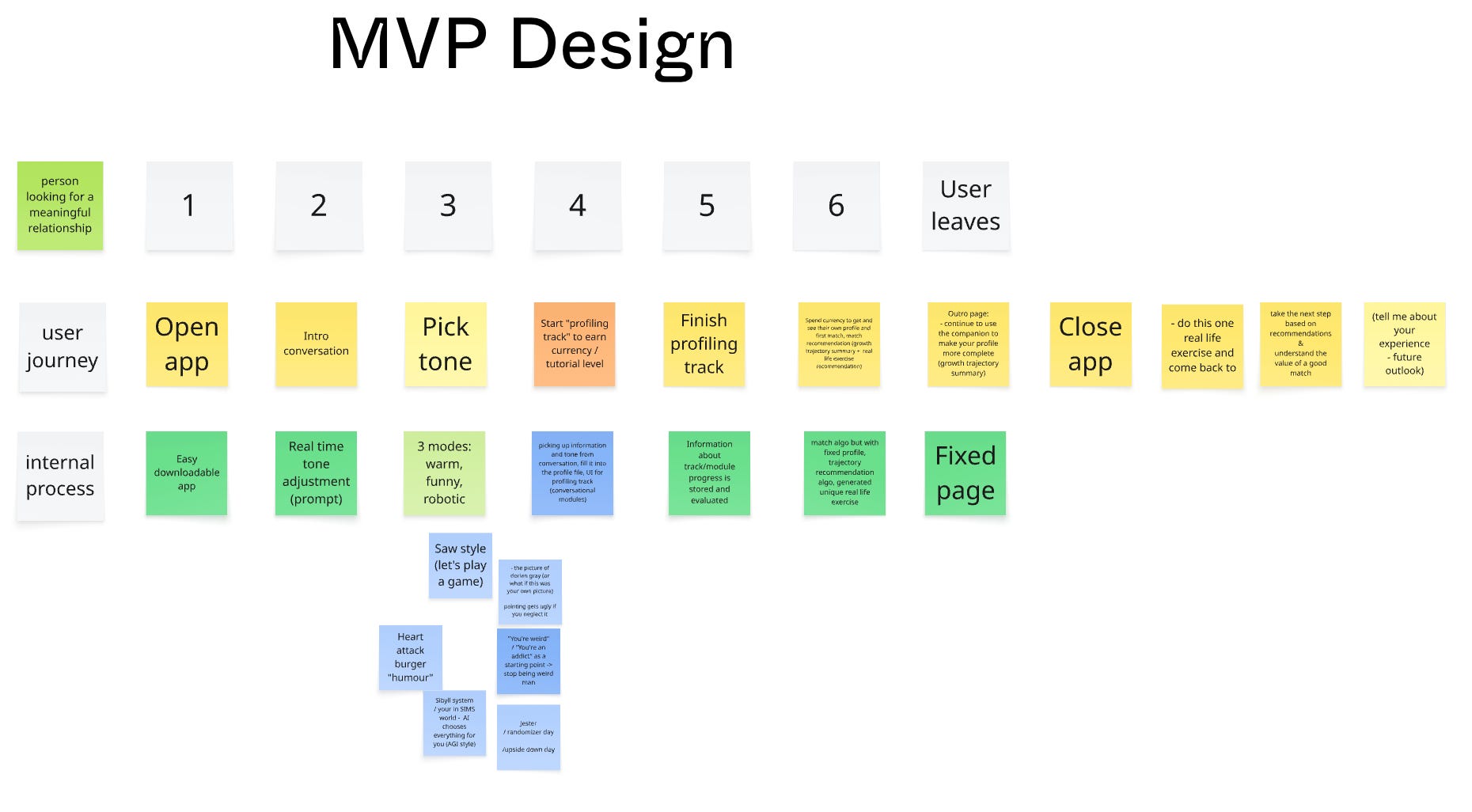
During the Sanctuary, Anna vibecoded the prototype within a few days, and we tested it with a few people (including me).
“The magical-behavior workshop and the early prototype tests gave me immediate clarity on the tone, personality, and feel of the MVP. It became obvious what needed refinement and what already resonated. The whole Sanctuary process collapsed my timeline: what I thought would take six months, I accomplished in two.”
- Anna
She is now iterating based on the gathered feedback.
Accommodation cost breakdown
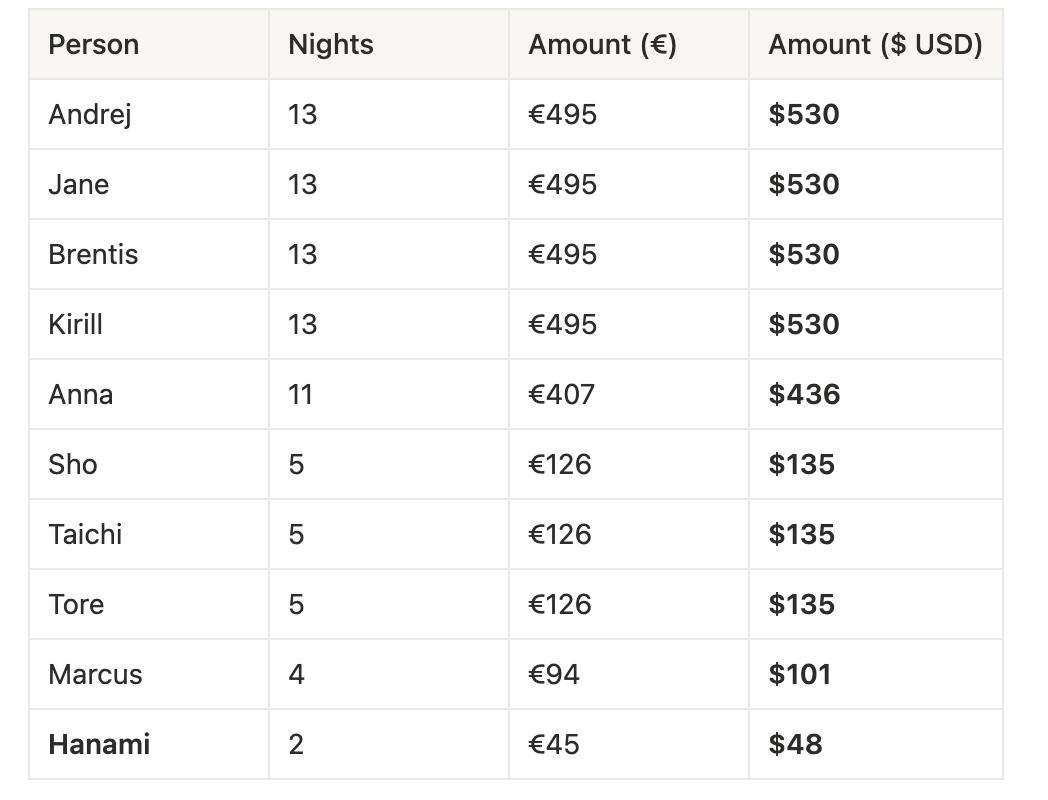
The accommodation over the course of the two weeks ended up costing at most $530. However, this didn’t include operational costs (planning and production), workshops, or food. I think it’s still a good baseline, considering that we lived in a villa with a lot of space, mostly individual rooms/bathrooms, two kitchens and a pool.
Next time: better structure for health, cooking, cleaning
Maybe we all enjoy working on exciting ideas, but we also need to consider the basics. Maintenance of health and surroundings is easy to neglect, but it’s the main thing to do.
So next time we will not start designing the Sanctuary from scratch but begin with a scaffolding that prioritises sleep, health, as well as either paid or self-organised cooking and cleaning. Beyond that, we also learned a few other things:
If we have a highly motivated group, two weeks is not enough. So we're aiming for a month next time, and need to ensure enough physical spaciousness.
Skill mapping will be part of the onboarding and potentially the selection process. Previously, I wasn’t sure how valuable it would be, but it turned out to be crucial in identifying collaborative opportunities quickly.
Based on our experience from testing M8, there is also an opportunity to support matchmaking based on personality in addition to expertise.
We will add a separate activity planning session or proposal system to make sure it’s easier to suggest activities and explore the local environment.
With a longer stay, weekly check-ins to ensure cleanliness are important.
We will include pre-structured design sprint(s) for all projects that apply. Depending on the level of complexity, this might include upfront academic-grade research on the problem space, stakeholder interviews, foundational strategy sessions, and access to relevant experts on-site and remotely.
Depending on the time until then, we may have the ability to build tools for skill sharing, a map of relevant locations, and a dashboard with active experiments.
New arrivals should be spaced out in bi-weekly intervals to avoid disruption of the group.
We aim to create or build a $50k project. The intention is to flip the traditional hackathon incentives and encourage self-driven value creation.
I’m excited to be part of the next session and will let you know how it develops.
See you next time!
 | A guest post by
|
I'm so glad you found Estuarine Mapping helpful, Anna! 😊 Always happy to chat further.